
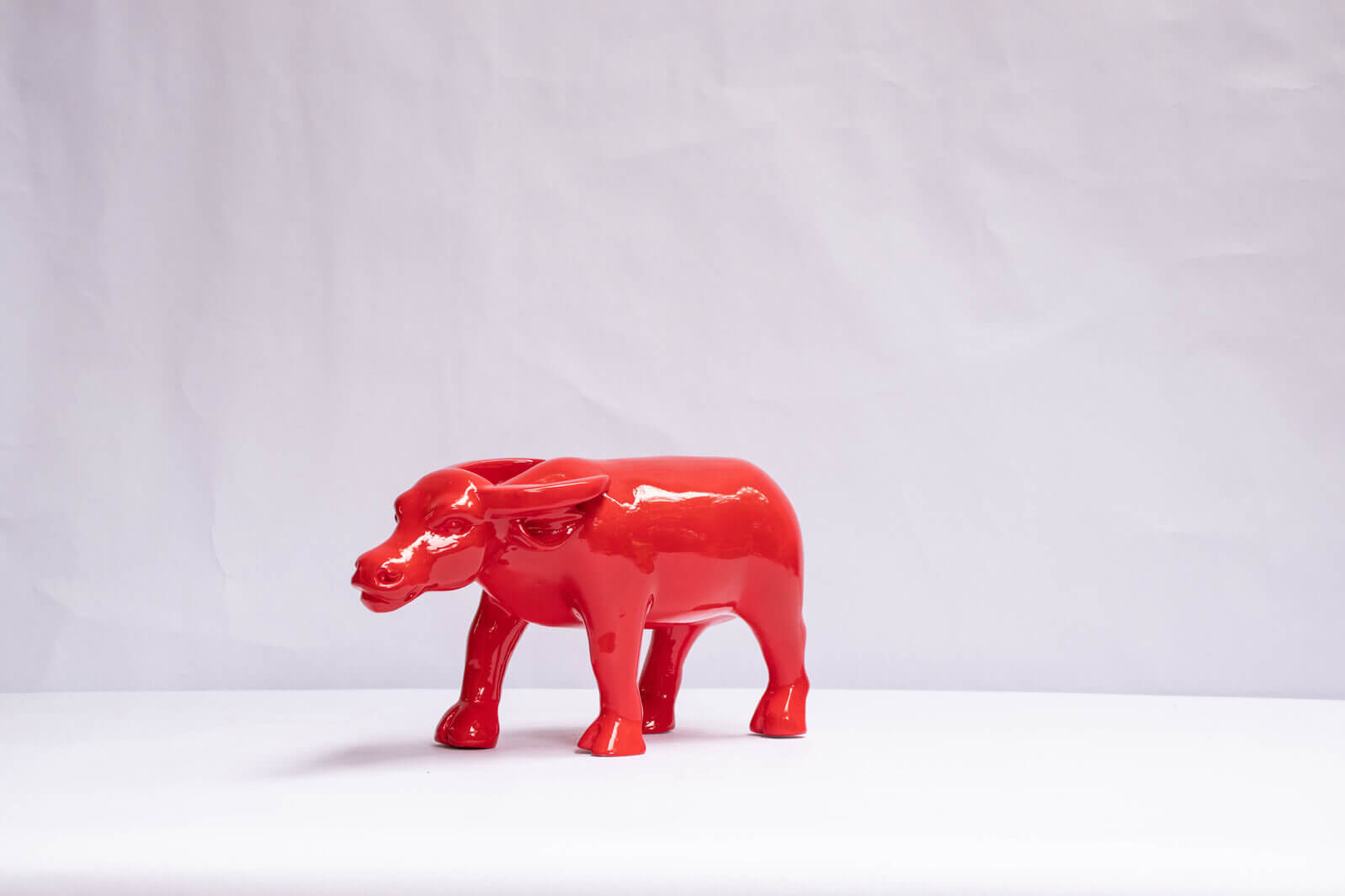
The Radiant Red Buffalo, A Unique Masterpiece made from Papier-mâché! Water buffalos imported to the Philippines from Cambodia in the early 20th century are called “Cambodian carabaos”. They have white or yellowish hair on a pinkish skin, but the eyes, hooves, and mouth are dark, and the skin may be speckled. They are slightly bigger and have larger horns. The wild water buffaloes in Srepok comprise the last remaining population in all of Cambodia, Vietnam, Laos, and eastern Thailand. Although the situation is serious in terms of population numbers, it is believed that the resident population – estimated at 30-50 animals – now at least stands a chance of survival. At least 130 million water buffaloes exist, and more people depend on them than on any other domestic animal. They are especially suitable for tilling rice fields, and their milk is richer in fat and protein than that of dairy cattle. Every year, Northeast of Phnom Penh, there is a water buffalo race to entertain visitors and honour a pledge made hundreds of years ago. There was a time when many village cattle which provide rural Cambodians with muscle power to plow their fields and transport agricultural products died from an unknown disease. The villagers prayed to a spirit to help save their animals from the disease and promised to show their gratitude by holding a water buffalo race each year on the last day of the “P’chum Ben” festival, as it is known in Cambodia. The race draws hundreds of spectators, who come to see riders and their animals charge down the racing field, the racers bouncing up and down on the backs of their water buffaloes, whose horns were draped with colorful cloth.
Related Products
-
-
-
-
-
-
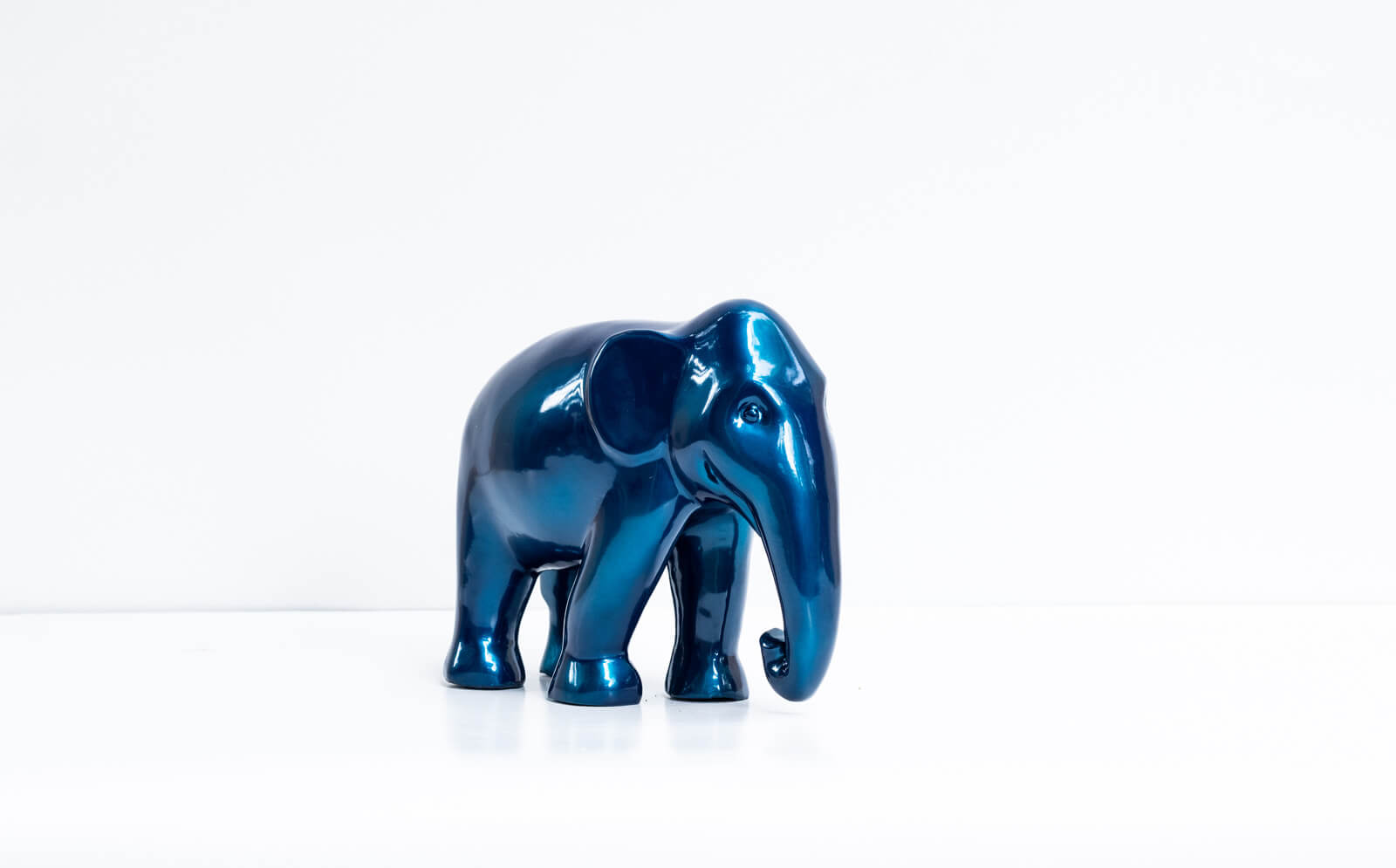
The Welcoming Night Elephant
$ 97.57 This product has multiple variants. The options may be chosen on the product page